Bilathera Technology
The power of leverage meets the sensitivity of your hands.
Use physics, not physique.
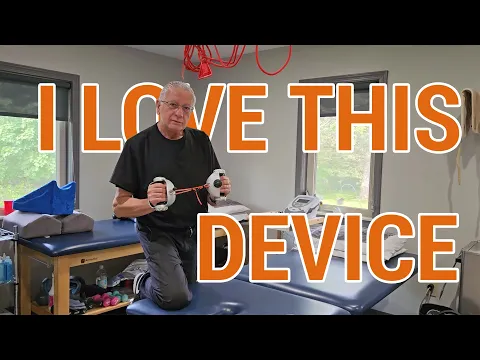
Bilathera Trigger PRO is a manual massage tool built on bilateral leverage: a compound lever arm system, ergonomically integrated around your hands. This innovative form factor lets you combine the dexterity and sensitivity of your hands with the efficiency and power of mechanical advantage. The levers give you x2 force leverage and two steady points of contact, so even deep tissue and trigger point massage on the hardest spots becomes effortless.

The principle
Leverage, humanity's oldest advantage.
A long bar over a stone lets one person shift a rock. That is what leverage does: it turns hard tasks that take a lot of force into simple, controlled actions. Trigger PRO brings that idea to manual therapy, in a form built around your hands that enhances what they can do mechanically. Here's how.
The mechanical advantage of a lever
Every lever has three marks: the effort, where you push; the pivot, where it turns; and the load, where the work gets done. The longer the effort side compared with the load side, the more the same push delivers. That ratio is the lever's mechanical advantage.
Leverage visualization for lifting a rock

Leverage visualization in Trigger PRO

Same three marks on the tool: you push at the back hand support, the lever turns where the strap meets it, and the attachment does the work. The effort side is about 140 mm and the load side about 68 mm: 140 ÷ 68 ≈ 2. That's where x2 force leverage comes from.
The pivot moves out of your body
Practitioners have always used leverage. Leaning in with body weight, dropping onto an elbow, reaching for a bar: each time, the pivot is somewhere in your own body. Your thumb, your wrist and your shoulder turn and take the reaction, hold after hold.
Trigger PRO moves the pivot out of your body and into the tool. The levers turn on the strap, the strap carries the reaction across to the other lever, and your hands are left to do what they do best: steer and feel. That's bilateral leverage. Patent pending (US 18/584,889; PCT WO2024176178A1).
Trigger PRO started with our founder, Thomas, as the person lying on the table. His target was a deep spot in his lower back, close to the spine, one of the most demanding spots to work with steady pressure.
How it works
Two levers, one strap.
Each lever carries the same three marks as the rock and bar, in the same colours. The tension strap adds a fourth part: it links the two levers, so each one is the other's counterbalance.

- Back hand support (BHS): effort
Where you push. It's the farthest point from the pivot, so it gives the longest arm.
- Coupling: pivot
Where the strap meets the lever. Once the strap is taut, the lever turns here.
- Tip attachment: load
Where the work happens, close to the pivot.
- Tension strap: the bilateral link
Joins the two couplings, so the two levers balance each other.
In four steps

- 1
Tension
Place the tip attachments, then set the strap so it is just taut before you press. A pre-tensioned strap holds the levers at the right angle, so your push goes into the tissue instead of tipping the tool over and pinching or dragging the skin.
- 2
Input
Press down through the back of your hand on the BHS. Your palm also guides the handle, pressing and sometimes turning it, but the BHS is the farthest point from the pivot, so that's where your push counts most.
- 3
Pivot
The lever turns at the coupling, held in place by the taut strap. The coupling sits much closer to the tip than to your hand, and that difference is the leverage.
- 4
Output
The tip attachment delivers about twice your push into the tissue.
Two steady pointsBilateral Therapy
Use it the way you use your hands. Work with both at once, for example on either side of the lower back (Bracketing). Or let one hand work while the other steadies (Anchoring): rest the broad Anchor attachment on soft tissue, away from bone, and the working lever pulls the strap taut and draws the Anchor toward it. The Anchor holds the area still and gives the working lever its counter-support. The steadying hand doesn't even need to be in the tool.
Either way, the two attachments press toward each other, so the contact stays where you want it, with leverage on your side. Bracing both sides also keeps the body steady, so the person on the table can fully relax.
Without the strap, you'd have two separate hand tools. The strap is where the leverage comes from.
The difference
Mechanics comparison
Push with the same effort three ways. Here is what reaches the muscle from each hand, and where the load lands on you.
Hands only

Traditional tool

Leveraged tool

| Measure | Hands only | Traditional tool | Trigger PRO |
|---|---|---|---|
| Your push, per hand | 10 kg | 10 kg | 10 kg |
| At the contact, per hand | 10 kg | 10 kg | 20 kg x2 |
| What it means for your hands | All the force sits on the tip of the thumb, so one small area takes all the stress. | The force spreads over the palm and fingers, a bigger surface, but at the cost of stability: a single point on the tissue can slip. | The biggest contact surface, palm and back of the hand, with amplified, stable pressure. |
Calculated from the lever geometry (140 ÷ 68 mm), per hand, in a typical setup. Not yet a lab measurement.
In practice
What it changes in your work.
Every hands-on technique comes down to the same four questions: how firm, where, which way, and for how long. Learn how Trigger PRO improves manual therapy.
Pressure
As light or as firm as you choose. Firmness is a setting, not a strain.
Precision
Two points hold the spot, so the pressure stays exactly where you want it.
Direction
Press straight in, toward the middle, or glide along and across a muscle.
Duration
Holds last as long as you decide, and the last one feels like the first.
Body mechanics
Lean in with body weight, wrists straight, thumbs out of the way.
Feel
Rigid aluminium and relaxed hands: you feel what the tissue is doing.
You stay in charge.
Trigger PRO doesn't replace your skills, it enhances them. Touch and assessment remain part of every treatment.
Bilateral leverage is the principle and Trigger PRO is the tool. BLSTM (Bilateral Leveraged Soft Tissue Mobilization) is the method practitioners learn with it, with levels and a Bilathera certificate: About BLSTM · For Practitioners
For sport, for tight spots at home and for your practice: Learn →
In the hands of people who do this every day

"I wish I'd had this earlier in my career."

"With two contact points converging from both sides, I can go deeper with pressure that stays stable and precise."

"Riding puts a lot of load on my core, so I use Trigger PRO before and after my sessions, as part of my warm-up and cool-down."
"It's my go-to tool for the points that are hardest to reach: around the lumbar spine, the piriformis and the shoulder."
"I like a lot of pressure on my lower back, and Trigger PRO's bilateral leverage gives me exactly that: high, steady pressure in a couple of minutes."
"Working two points at the same time saves a lot of time when you look after a full squad every day."

Shown at FIBO, WPC and other international trade shows.
Good questions
Will I still feel the tissue?
Yes, and your fingers stay free to palpate while you hold Trigger PRO. Most people start by using it exactly where their fingers would go. With a little practice, the rigid metal frame passes the feel of the tissue into your whole hand. And because you're no longer pushing so hard, you read the tissue more clearly than with knuckles or an elbow.
Does it vibrate?
Not by design: pure mechanics means you set every second of the pressure. Some work does call for vibration at a set frequency, so we're developing powered attachments that will fit any Trigger PRO, including the one you buy today.
Can I use just one lever?
Yes. On its own, one lever works as a precise single-point tool. Join the two with the tension strap and your hands become one system: that's where the x2 force leverage comes from.
Why does the tension strap matter?
The strap links your two hands into one system: each hand braces against the other, and that is where the leverage and the two steady contact points come from. Keep it taut and set its length to the region you work on.
Is it hard to learn?
No. Some people need a little more practice than others, but the free guides and videos help you climb the learning curve until it becomes routine.
Can I use it on myself?
Yes, on yourself or with a partner. Some areas are easy to reach on your own, others are easier with help. Our free guides show you how.
What's in the box?
- Trigger PRO: two levers joined by the base tension strap
- Tension Strap Extension, 30 cm (connects in line with the base strap for wider setups, such as bilateral bracketing of the glutes and hips)
- Silicone-Tip Attachments (2)
- Anchor Attachments (2)
- Silicone Caps (2) and O-rings (2)
- Microfiber Trigger Point Massage Map
- Adhesive Device Hanger
- User manual
Every attachment is also sold on its own.
Curious about the studies behind hands-on work? Browse our manual therapy research library: plain summaries, limits and links to the original papers.
2-year warranty
On every Trigger PRO.
Free guides
Online setups and routines, with more added every month.
Real people
Support from the team that builds it.
Made in France
Rigid aluminium, assembled in-house.
Patent pending
US 18/584,889; PCT WO2024176178A1
Put leverage in your hands.
Want to see the setup first? Quick start guide →
Equipping a clinic or team? Bulk order →
Returns: conditions apply. See our returns policy